Amethyst is purple quartz. That is the mineralogical description, and it covers the basics: purple, translucent, a member of the quartz family, found on most inhabited continents. But it does not explain why amethyst consistently ends up in jewelry intended for calm, sleep, and mental quiet rather than in pieces about energy or ambition.
That pattern is worth understanding before you buy.
Why Amethyst and Calm Go Together
The association between amethyst and mental calm has roots in multiple traditions. In ancient Greek practice, amethyst was linked to clear-headedness and sobriety — the word comes from the Greek "amethystos," meaning "not drunk." In Buddhist contexts, purple stones have associations with meditation and the quieting of mental noise. In contemporary crystal practice, amethyst is consistently placed in the category of calming, grounding, and sleep-supporting stones.
The visual register of the stone supports this: the cool purple tone is neither aggressive nor inert. It has a quality of stillness that warmer stones — citrine, carnelian, red agate — do not have. Whether the stone does anything beyond looking calm is a question each person answers differently. The consistent pattern across people and traditions suggests the association is not arbitrary.
When Amethyst Makes Sense
Amethyst is the right choice when what you need is a reduction rather than an addition. Not more energy, but less noise. Not faster, but quieter. It suits periods of sustained stress, difficulty sleeping, anxious thinking, or the particular exhaustion that comes from having too many things in your head at once.
It also suits people who meditate or have a mindfulness practice. The visual anchor of a consistent piece worn during or around practice tends to reinforce the practice itself — the piece becomes associated with the state, and eventually seeing the piece helps bring you closer to it.
For people who do not have any spiritual or wellness practice and are simply drawn to the color: that is equally valid. A piece you wear because you find it visually appealing will be worn, and a piece that is worn serves its purpose regardless of the rationale.
Jewelry Styles That Suit Amethyst
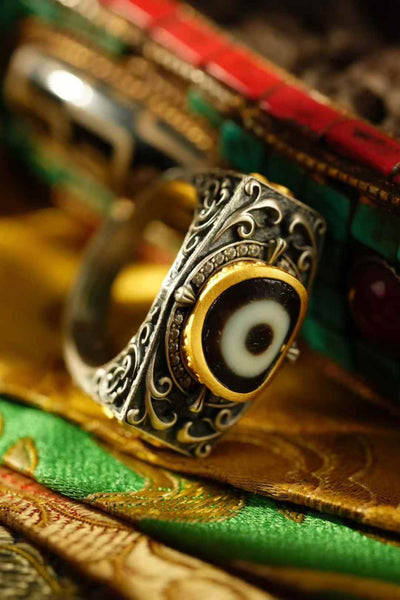
Amethyst works best in settings that support its quietness rather than compete with it. Silver settings — particularly oxidized or matte silver in the Tibetan style — complement the cool purple tone without adding visual noise. Gold-toned settings can work but require the amethyst to be deeply saturated in color to avoid being overwhelmed by the metal's warmth.
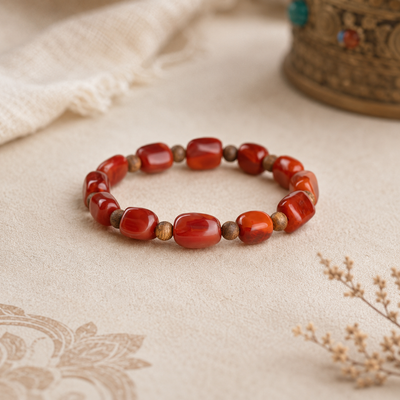
For bracelets, amethyst beads on a simple elastic or knotted cord are a natural format — the focus stays on the stone. Combination pieces that pair amethyst with wood (particularly agarwood or sandalwood) are effective: the cool stone against the warm organic wood creates a contrast that reads as balanced rather than conflicted.
Amethyst pendant necklaces suit everyday wear well. The stone hangs close to the chest and does not move around or catch on clothing the way some beaded pieces do. A simple setting on a thin silver chain is the most versatile format.

Yes — amethyst can fade with prolonged direct sunlight exposure. The purple color in amethyst comes from iron impurities and irradiation during the stone's formation; sustained UV exposure can gradually bleach the color. Avoid leaving amethyst jewelry in direct sun for extended periods. Normal indoor light and brief outdoor wear are not a concern.
Yes. Amethyst is a 7 on the Mohs hardness scale, which makes it durable enough for daily wear. Remove it before activities that involve hard impacts or heavy chemical exposure (chlorinated pools, cleaning products). Otherwise it handles the friction and minor contact of daily wear well.