Protection jewelry is not a new idea. Across most of human history and most cultures, people have carried or worn objects believed to offer protection — amulets, talismans, specific stones, specific symbols. The Tibetan tradition is one of the richest examples of this, with a developed vocabulary of protective materials, symbols, and practices that has been refined over centuries.
What follows is a practical guide to the stones and crystals used for protection in the TibetanSerenity line: what they are, why they appear in protection-oriented pieces, and how to choose between them.
Turquoise: The Primary Protection Stone
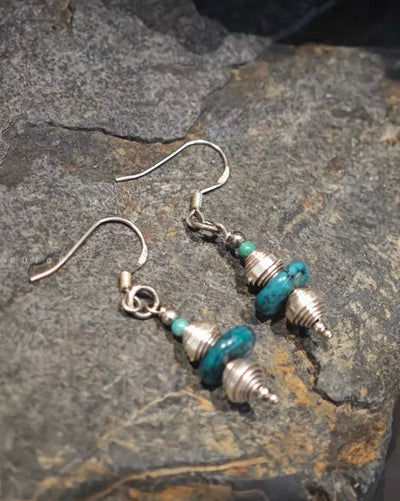
In many Tibetan craft traditions, turquoise is the stone most directly associated with protection. It appears in protective amulets, in jewelry worn during travel, and in pieces intended to shield the wearer from harm. The specific associations vary by region and tradition, but the protective orientation of turquoise in Himalayan contexts is consistent enough to be treated as a general principle rather than an exception.
Visually, turquoise has the presence that protection pieces tend to call for — it is not a delicate stone, and pieces featuring it do not read as fragile. A well-made turquoise piece in a silver or oxidized metal setting has a solidity that lighter, more translucent stones do not convey.

Lapis Lazuli: Spiritual Protection
Lapis lazuli — deep blue with gold-flecked pyrite inclusions — has strong protective associations in Tibetan Buddhist contexts. It appears in sacred objects and images, and in jewelry intended to offer spiritual protection and ward off negative influence. The combination of deep blue and gold is visually distinctive and immediately recognizable as a Tibetan-influenced material choice.
Compared to turquoise, lapis lazuli reads as more formally spiritual — better suited to someone who wants a piece with explicit Buddhist cultural context, less suited to someone looking for a more everyday aesthetic.

Dark Agate: Grounded Protection
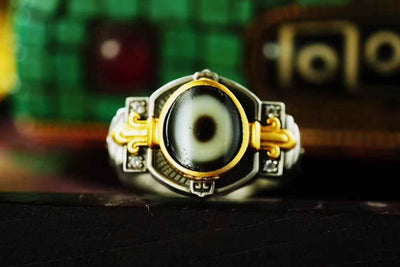
Darker agate tones — near-black banded agate, deep brown, dark grey — appear in protection-oriented pieces across multiple traditions. The visual logic is consistent: darker, heavier-looking stones convey a quality of weight and solidity that reads as protective in a way that lighter, translucent stones do not. Red agate in particular has strong protective associations in Chinese and Tibetan contexts.
For wearers who want protection jewelry without the specific Tibetan Buddhist aesthetic of turquoise or lapis lazuli, dark agate offers a more visually neutral option that still carries the protective intention.