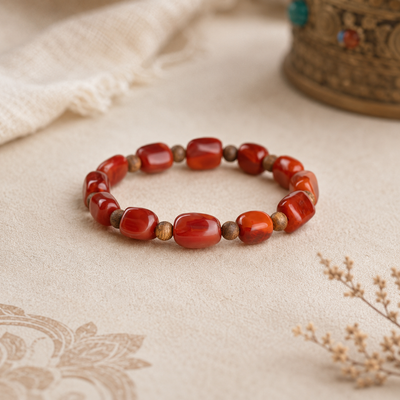
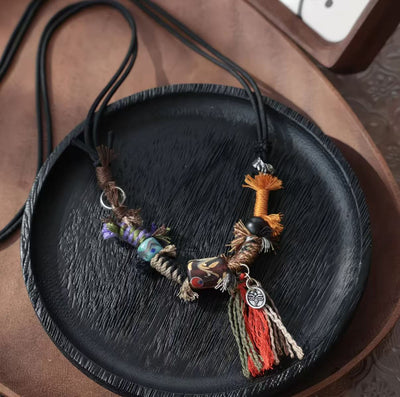
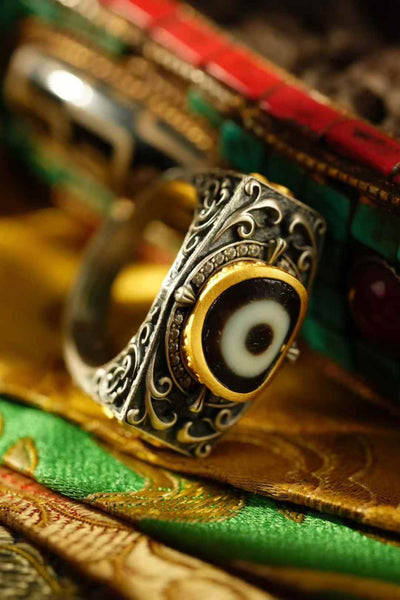
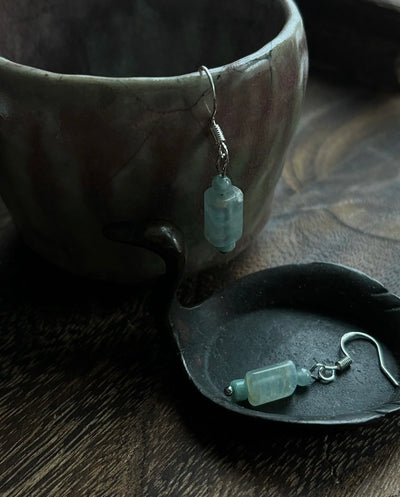
For readers who want to carry harmony and commitment in a more concentrated symbolic form, the rings collection is a fitting next step beyond this Love reflection.
Part of: Love · Magnetism & Resonance Series ← Click to return to Hub
There is a delicate moment in every relationship when love must learn a new grammar.
Until then, there is only I.
My rhythms. My fears. My ambitions. My private way of restoring balance after a difficult day.
Then someone enters, and without anyone announcing it, a second language becomes necessary.
We.
For some people, this change feels natural. For others, it feels dangerous. To say we can sound like losing shape. Like dissolving. Like becoming responsible not only for one heart, but for the atmosphere between two.
And yet a mature bond is not built by staying forever in I. Nor is it built by erasing oneself inside we.
It is built by learning balance.
Harmony Is Not Sameness
One of the quiet misunderstandings of love is the belief that harmony means perfect agreement.
It does not.
Harmony means proportion.
Harmony means difference arranged with respect.
Harmony means two energies learning how not to injure each other unnecessarily.
This is why so much sacred art from the Tibetan world feels balanced without feeling flat. Interlaced lines, mirrored forms, repeating structures, and the endless knot all suggest a truth that relationships must also learn: connection does not require collapse.
Two lines can cross and still retain their own direction.
Two forces can support each other without becoming identical.
Two lives can be woven together without one disappearing into the other.
This is the beauty of a true we. It is not fusion. It is living balance.
What Tibetan Symbols Quietly Teach About Relationship
Sacred symbols endure because they hold lessons larger than decoration.
The endless knot, for example, is often understood as a sign of interdependence, continuity, and inseparable causes and conditions. Nothing exists entirely alone. Everything touches something else.
In a relationship, this can be read with great tenderness.
What you say in irritation does not vanish.
What you repeat in kindness also does not vanish.
The atmosphere you build together becomes part of the bond itself.
Other balanced forms in Tibetan design teach a similar lesson: strength is most beautiful when it knows how to remain in relationship. Symmetry does not eliminate individuality; it places individuality inside a wider coherence.
This is why symbols of harmony can feel so comforting in times of relational strain. They remind the heart that love is not merely emotion. It is pattern. It is practice. It is the repeated arrangement of self and other into a form that can hold warmth without disorder.
Independence Is Not the Opposite of Intimacy
Many people fear that commitment will cost them their center.
Sometimes they are right to fear it. Not every relationship knows how to honor space.
But healthy intimacy does not ask you to abandon your interior life.
It asks you to bring a well-formed self into shared life.
A person with no center cannot create harmony—only dependency.
A person with rigid self-protection cannot create harmony—only distance.
The art lies between these extremes.
To know when to stand alone in your truth.
To know when to soften for the sake of peace.
To know when help is needed.
To know when control is disguising itself as care.
In this sense, independence is not a wall against love. It is one of the pillars that makes love safe. When two people can each stand in themselves, support becomes a gift rather than a demand.
Mutual Support Without Possession
There is a kind of love that grips, and a kind of love that steadies.
The first is often loud. The second lasts longer.
Mutual support is not watching every move.
It is not managing the other person's feelings to keep yourself comfortable.
It is not turning closeness into entitlement.
True support sounds more like this:
I want your life to remain alive, even as our lives become intertwined.
I want to be leaned on, but not used as a substitute for your own center.
I want us to be devoted, but not imprisoned.
This is a high form of tenderness.
It requires emotional maturity, but also reminders. In hard moments, people forget. They grasp. They defend. They interpret difference as rejection. A sacred symbol, worn close to the body, can become a small teacher in such moments—a reminder that balance is not automatic, and therefore must be practiced.
For Those Learning to Build a “We”
If you are:
- trying to love without losing yourself,
- learning how to support a partner without controlling them,
- recovering from relationships where closeness felt consuming,
- or simply longing for a more balanced, enduring bond—
then perhaps the task is not to become more agreeable.
Perhaps the task is to become more harmonious.
To let your individuality remain intact.
To let your care become steadier.
To let your communication carry less heat and more rhythm.
To let the word we mean shared alignment rather than mutual disappearance.
That is the art.
And like all sacred arts, it is made not from one dramatic moment, but from many small acts of balance.
💗 Love Series · For You
If you are seeking a symbol of harmony, mutual support, and balanced devotion, we invite you to explore the TibetanSerenity Love Collection.
Each piece has been through a traditional blessing ceremony—to accompany relationships that honor both closeness and individuality, and to remind the heart that balanced love steadies rather than consumes.
👉 Explore TibetanSerenity Love Collection
You Might Also Like
- If Love Has a Frequency, Who Are You Drawing Into Your Life? ← Love Sub-article A
- The Weight of a Token: Why Ritual Still Matters in a Fast-Food Era ← Love Sub-article B
Return to Love Hub · Read Pillar: The Silent Power of the Himalayas: A Philosophy of Sacred Protection