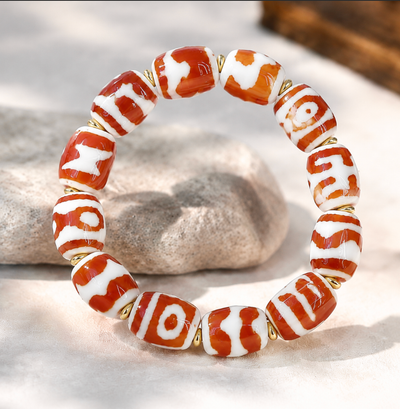
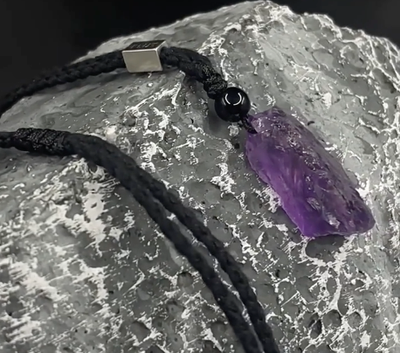
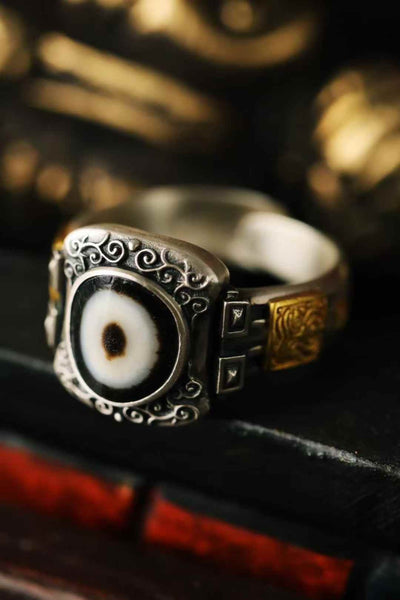
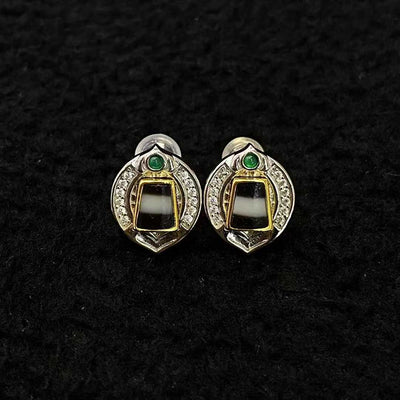
If you are drawn to objects that stay close to the heart as part of a daily ritual, the necklace collection offers a natural continuation of this reflection.
Part of: Love · Magnetism & Resonance Series ← Click to return to Hub
We live in a time that moves very quickly.
Messages are answered while walking.
Apologies are typed between meetings.
Affection is often expressed in shortcuts—an emoji, a like, a late-night voice note sent half-awake.
None of these things are wrong. But they do reveal something about the age we live in: feelings are expected to travel at the speed of convenience.
And yet, when love becomes difficult—during distance, after an argument, in a season when two people are tired and speaking badly—what comforts us most is rarely something convenient.
It is often something tangible.
Something held.
Something kept.
Something that says, without drama: this bond once had weight, and perhaps still does.
Why Ritual Still Matters
Modern life is efficient, but the heart is not.
The heart does not trust instantly.
It does not repair instantly.
It does not forget with dignity just because an app has made communication faster.
This is why ritual survives every modern invention.
A ritual is simply attention given form.
It may be the way two people exchange a token at the beginning of a promise.
It may be the habit of touching the same ring before a difficult conversation.
It may be the quiet act of returning to an object when distance makes love feel abstract.
Ritual slows feeling down enough for it to become sincere.
In sacred cultures, the slow gesture matters because what is precious should not be handled carelessly. Love is no different. A relationship cannot live on intensity alone. It also needs repeated forms of remembrance.
The Weight of a Token
A token matters not because it is expensive, but because it is durable.
Words can be spoken in anger.
Moods can change by evening.
Circumstances can distort how two people hear each other.
But an object remains.
It receives time.
It keeps touch.
It gathers memory.
That is why lovers in so many traditions give one another something wearable or holdable. Not to prove ownership. Not to create spectacle. But to let affection enter matter.
Once love has entered matter, it becomes easier to remember during fragile hours.
You pick up the bracelet after an argument and remember who this person was before both of you became defensive.
You touch the pendant while traveling and remember that commitment is not canceled by distance.
You notice the softened edge of a ring and realize that what has endured is not just metal, but the years it has quietly witnessed.
This is the true weight of a token: continuity.
What Holds During Conflict and Distance
No object can solve a broken relationship.
If trust has been violated, repair requires honesty.
If resentment has hardened, repair requires humility.
If two people no longer wish to meet each other in truth, no symbol can do that work for them.
And still, symbols matter.
They matter because conflict narrows memory.
In the middle of hurt, we forget the larger field of the bond.
We reduce a whole relationship to the worst ten minutes of the week.
A meaningful token interrupts that reduction.
It does not say, "Ignore the problem."
It says, "Remember the whole."
Sometimes that is enough to soften a voice before replying.
Sometimes that is enough to prevent pride from speaking first.
Sometimes that is enough to help two people return to the frequency they meant to protect together.
In times of physical distance, the effect can be even more tender. A small object worn close to the body can become a form of silent companionship—a shared reference point when schedules, countries, or ordinary life keep two people apart.
In a Fast-Food Era, Slowness Becomes a Form of Respect
We are surrounded by disposable experiences.
Disposable entertainment.
Disposable trends.
Disposable language.
Love suffers when it is treated in the same spirit.
A token resists disposability.
It says: this feeling should take shape.
It says: this promise should be touched, not merely spoken.
It says: I do not want our bond to exist only in the unstable space of mood.
There is something quietly radical about that.
To choose a small ritual, to keep a blessed object, to honor the relationship with something lasting—these are not old-fashioned gestures. They are acts of emotional seriousness.
They remind us that sacredness is rarely loud. Often it appears as patience, repetition, and care.
For Those Who Want Love to Last Beyond Mood
If you are in a season of:
- long distance, where affection needs a tangible bridge,
- misunderstanding, where you want to remember the bond beneath the tension,
- commitment, where you want your promise to have a physical form,
- or quiet devotion, where love feels too precious to leave undefined—
then a token may matter more than you think.
Not because it replaces communication.
Because it dignifies communication.
Not because it guarantees permanence.
Because it helps the heart act with more reverence while permanence is being built.
Sometimes a relationship survives not through grand romantic gestures, but through small, repeated returns to what is still true.
💗 Love Series · For You
If you are seeking a meaningful object to accompany devotion, remembrance, and emotional steadiness, we invite you to explore the TibetanSerenity Love Collection.
Each piece has been through a traditional blessing ceremony—not to replace communication, but to hold tenderness with dignity, soften distance, and give affection a form the hand can return to.
👉 Explore TibetanSerenity Love Collection
You Might Also Like
- If Love Has a Frequency, Who Are You Drawing Into Your Life? ← Love Sub-article A
- From I to We: The Art of Harmony and Balance in Tibetan Symbols ← Love Sub-article C
Return to Love Hub · Read Pillar: The Silent Power of the Himalayas: A Philosophy of Sacred Protection