Buying lapis lazuli comes down to two things: telling real stone from dyed imitations, and reading quality, since "lapis" ranges from deep even blue to a pale, chalky, over-veined stone. Here is how to judge it and what the gold flecks actually are.
What Lapis Lazuli Is
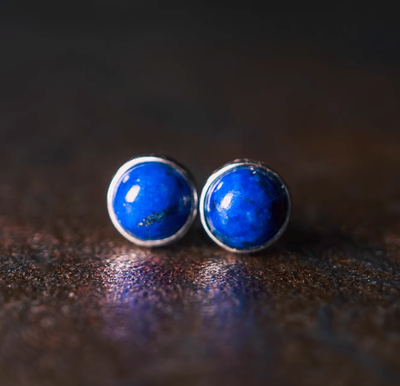
Lapis is a rock rather than a single mineral. Its blue comes from lazurite, the gold sparkle is pyrite, and the white streaks are calcite. That mix is the whole character of the stone. The best pieces are a deep, even blue with a light scatter of gold pyrite and little white; lower grades go pale, grey, or heavily veined with calcite.
Reading Quality, and Spotting Fakes
For natural lapis, value rises with deep saturated blue, fine pyrite flecks spread evenly, and minimal white calcite patches. Too much white or a washed-out grey-blue pulls the grade down. The common fakes are dyed howlite or dyed reconstituted "lapis," which look too perfectly uniform and may rub blue onto a damp cloth. As with most stones, flawless even color at a low price is the warning sign.
The Gold Flecks Are Pyrite, Not Gold
People often ask about the gold sparkle. It is pyrite, a natural iron mineral that forms inside the rock, and a moderate scatter of it is considered desirable rather than a defect. Lapis with a fine even dusting of pyrite is often more prized than completely flecks-free blue.
A Stone With a Long History
Lapis has been mined for thousands of years, much of it historically from Afghanistan, and was once ground into ultramarine, a blue pigment that for centuries cost more than gold and was reserved for the most important paintings. In many Himalayan and older Asian traditions it is associated with insight, truth, and clear speech, though as always the specific meanings vary by region and teacher.
Caring for Lapis
Lapis needs a gentler hand than quartz stones. It is fairly soft, around 5 to 5.5 on the Mohs scale, and porous, so it dislikes water, acids, and perfume, all of which can dull the blue or affect dyed surfaces. Wipe it with a soft dry cloth, keep it out of long water contact, and store it apart from harder stones so it does not scratch.
Choosing by feeling or intention? See how to choose stones and crystals by intention.


Real lapis is uneven, with deep blue broken by gold pyrite flecks and some white calcite. Dyed howlite or reconstituted lapis looks too uniform and can leave blue on a damp cloth. A suspiciously low price for flawless even blue is a warning sign.
No. The gold sparkle is pyrite, a natural iron mineral in the rock. A scatter of it is normal and prized; it is not gold and not a flaw.
A little. It is fairly soft, around 5 to 5.5 on the Mohs scale, and dislikes water, acids, and perfume. Wipe it dry, keep it from long water contact, and store it away from harder stones.