Clear quartz is the most common crystal you will see, which is exactly why so much of it is actually glass. The two questions worth answering before buying are how to tell natural quartz from glass, and whether the clarity grade you are paying for is the one you actually want.
What Clear Quartz Is
Clear quartz is pure crystalline silica, the same mineral family as tiger eye and agate but in its transparent form. It is one of the few stones Tibetan and Himalayan craftspeople have long cut into clear faceted beads, valued for its transparency and its long association with clarity of mind.
Natural Quartz vs Glass
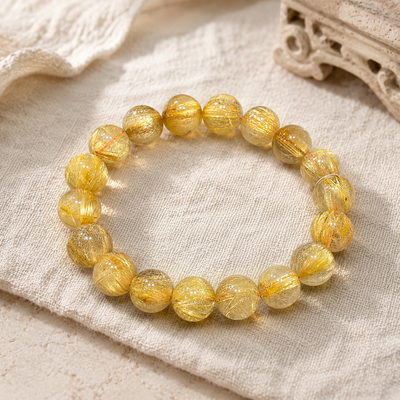
Because flawless clear beads are easy to fake, this is where care pays off. Natural quartz almost always carries small signs of its growth: faint internal veils, wisps, or hairline inclusions, and it feels noticeably cooler to the touch than glass. Manufactured glass tends to be completely flawless apart from the occasional round air bubble, and it warms up fast in the hand. Cheap, perfectly clear "crystal" beads are very often glass, so treat flawless clarity at a low price with suspicion.
Reading Clarity
Quartz runs from water-clear to softly veiled to milky. Fully transparent stone is prized for a clean, bright look, but lightly veiled or milky quartz is just as natural, and plenty of people prefer the softer feel of it. This is a question of the look you want rather than quality, so choose by eye instead of chasing flawless transparency.
Clear Quartz in Practice
In many crystal traditions clear quartz is treated as an all-purpose stone, often described as amplifying intention or bringing mental clarity, which is part of why it is so widely worn. As with all of these associations the specifics vary by tradition, so take them as something you can lean into rather than fixed fact. As an everyday piece it is simply a bright, neutral stone that pairs with anything.
Caring for Clear Quartz
Easy to live with. Quartz is hard, around 7 on the Mohs scale, so everyday knocks rarely mark it. Keep it away from harsh chemicals, wipe it with a soft cloth, and that is about all it asks.
New to crystals? Start with a beginner's guide to healing crystals.


Natural quartz usually has tiny internal veils, wisps, or hairline inclusions, and feels cooler to the touch than glass. Manufactured glass is often flawless with the odd round air bubble. Perfectly clear, cheap 'crystal' beads are frequently glass.
Not exactly. Fully transparent quartz is prized for a clean look, but quartz with soft internal veils or a milky cast is natural and many people prefer it. It is a matter of look rather than real or fake.
Very little. Quartz is hard, around 7 on the Mohs scale, so it stands up to daily wear. Keep it from hard knocks and harsh chemicals and wipe it with a soft cloth.