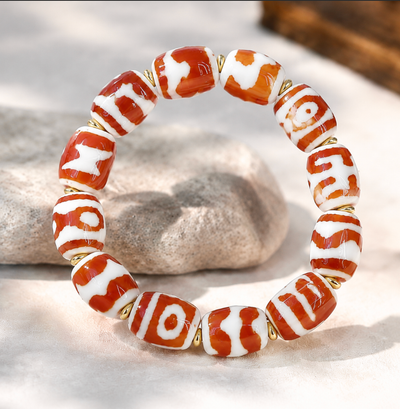
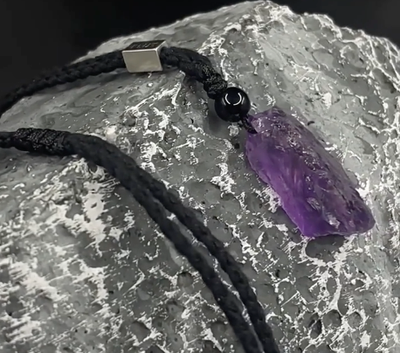
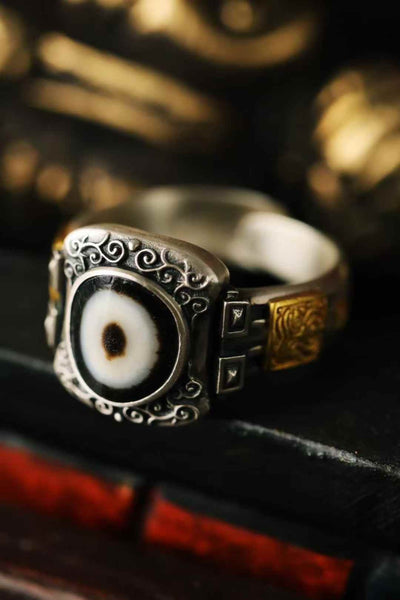
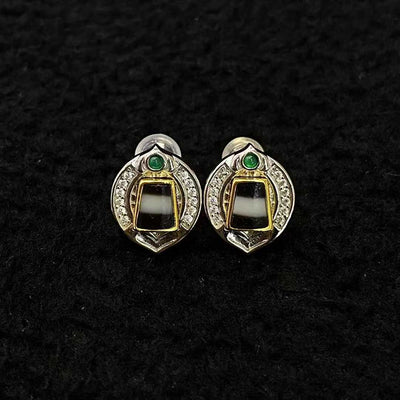
Most mala beads are made from wood — bodhi seed, sandalwood, rosewood. Crystal mala beads work differently. The material is harder, cooler to the touch, and does not develop a patina the way wood does. What it does instead is stay visually consistent over years of use, which makes it a different kind of commitment.
This guide covers the two most common crystals used in mala beads — amethyst and citrine — what each one is associated with, and how to decide between them based on what you are actually trying to carry into your practice or daily wear.
→ Part of Mala Bead Materials: Bodhi, Sandalwood, Crystal, and How Each One Feels to Wear →
How Crystal Malas Are Different from Wood Malas
Wood malas change with use. Bodhi seed darkens and smooths over months of handling. Sandalwood gradually loses its scent. The object becomes a record of the practice.
Crystal malas do not change in the same way. Amethyst beads look essentially the same after three years of daily wear as they did when new. For some people this feels like a limitation. For others it is the point — the material provides a stable visual anchor rather than a developing one.
The weight is also different. A full 108-bead amethyst mala is noticeably heavier than a wooden one of the same size. As a necklace this adds physical presence. As a bracelet wrapped multiple times around the wrist, the weight becomes part of how you feel it throughout the day.
Amethyst Mala Beads
Amethyst is a purple variety of quartz. The color ranges from pale lavender to deep violet depending on mineral concentration. In many spiritual contexts, amethyst is associated with calm, mental clarity, and states that support meditation — partly because of its color, partly because of long-standing use in contemplative traditions.
As a mala material, amethyst works particularly well for people who use the beads primarily during sitting practice rather than all-day wear. The coolness of the stone at the start of a session, the consistency of the bead surface under the thumb — these are tactile qualities that wood does not offer in the same way.
It also pairs naturally with silver spacer beads, which is why many Tibetan-style amethyst malas use silver as the accent material rather than brass or gold. The cool tones work together visually.
Who it suits best: people with an established meditation practice looking for a dedicated practice object; people drawn to purple or cool-toned jewelry; people who prefer a piece that stays visually stable over time rather than aging.
→ Amethyst Meaning: Symbolism, Uses, and Best Jewelry Styles →
Citrine Mala Beads
Citrine is a yellow to amber variety of quartz. Natural citrine ranges from pale straw yellow to a deeper honey amber. Its warm color is what distinguishes it visually from amethyst and from most other crystal mala options.
In many traditions, citrine is associated with abundance, warmth, and forward-moving energy — the qualities that yellow and amber colors have tended to carry across cultures. As a mala material this translates to a piece that feels more outward than inward. Where amethyst malas tend to be chosen for quieting and focusing, citrine malas are more often chosen for energizing or for practices oriented toward intention-setting.
Citrine also reads differently as daily jewelry. The warm amber tones are more versatile across skin tones and wardrobe colors than amethyst's purple, which makes it a slightly easier recommendation for people who want a mala they can wear throughout the day without it pulling focus.
Who it suits best: people interested in abundance or prosperity practices; people who prefer warm-toned jewelry; people looking for a mala that functions well as both a practice tool and everyday jewelry.
→ Citrine Meaning: Symbolism, Energy, and When to Wear It →
Choosing Between the Two
The clearest way to decide: what are you doing when you reach for the mala?
If the answer is sitting practice — breath counting, mantra repetition, sessions where you want the beads to help you go inward — amethyst. The cooler color and the associations around clarity and stillness tend to support that use.
If the answer is daily wear with occasional intention-setting — wearing it through a workday, keeping it on during a period when you are working toward something specific — citrine. The warm tone is easier to carry across different contexts and the energy associations are more outward-facing.
If neither feels decisive, go with the color you are more drawn to when you look at both side by side. For a mala you will handle daily, the visual pull matters.
| Amethyst | Citrine | |
|---|---|---|
| Color | Lavender to deep violet | Pale yellow to amber |
| Feel | Cool, inward, quieting | Warm, outward, energizing |
| Best for | Sitting practice, clarity | Daily wear, intention-setting |
| Pairs with | Silver, cool tones | Most metals, warm tones |
| As a gift | For practitioners, calm-seekers | For abundance, new beginnings |