Mala beads come in a range of materials, and the material affects more than appearance. It affects how the beads feel to count, how the piece ages, and what associations it carries. If you are choosing between bodhi seed, sandalwood, and crystal, the differences are significant enough to be worth understanding before you decide.
This guide covers the three main material categories in TibetanSerenity's mala line and what distinguishes each one.
→ Part of Mala Beads: Types, Meaning, and How to Use Them →
Rudraksha Mala: Mukhi Faces, Choosing, and Care →
Bodhi Seed
Bodhi seed is the most traditional mala material. The seeds come from the sacred fig tree — the species under which the Buddha is said to have attained enlightenment — and their use in mala beads predates most other materials by centuries.
What distinguishes bodhi seed as a material is how it changes. New bodhi seed beads are pale and relatively light in color. With regular handling they darken steadily, develop a surface sheen, and become smoother. After years of practice, a bodhi seed mala looks entirely different from when it was new — and that transformation is part of what makes it meaningful to practitioners who use it seriously. The object develops alongside the practice.
The surface texture is also distinctive: slightly rough and organic when new, progressively smoother with use. This makes it particularly good for counting — the thumb finds each bead easily.
→ Bodhi Seed Mala: Meaning, How to Use It, and How to Choose →
Sandalwood
Sandalwood malas are lighter than bodhi seed and have a mild natural scent that fades slowly over years of use. The wood is softer than bodhi seed, which means it develops surface marks more readily — small scratches and wear marks accumulate over time. Most people do not consider this damage; it is the same kind of character accumulation that bodhi seed undergoes, just expressed differently.
Sandalwood is common in East Asian Buddhist traditions, where it carries associations with calm and purification. As a practice material, it suits people who want something lighter to wear all day and who respond to the faint scent as part of the meditation experience.
It is also often the more accessible starting point for someone new to mala practice. The piece does not carry the same weight of tradition as bodhi seed, which can make it easier to start using without feeling like you need to earn it first.
Crystal (Amethyst and Citrine)
Crystal malas work differently from wood in almost every respect. They do not age visibly, they are heavier, and they stay consistent in appearance across years of wear. The coolness of the stone against the thumb at the start of a session is a tactile quality wood does not offer.
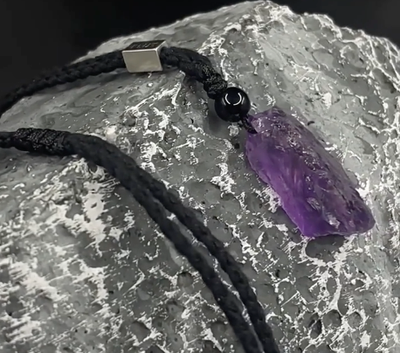
The two most common crystal types in this line are amethyst and citrine. Amethyst — purple quartz — is commonly associated with calm and mental clarity, and is particularly suited to sitting practice. Citrine — yellow to amber quartz — is warmer in color and in the associations it carries, more suited to daily wear and intention-setting practices oriented toward abundance or forward movement.
Crystal malas require slightly different care than wood: avoid prolonged direct sunlight (which can fade amethyst over months), and note that crystal beads can chip if knocked hard against hard surfaces.
→ Crystal Mala Beads: Amethyst, Citrine, and How to Choose by Intention →
How to Choose
If you want a mala that develops with your practice and records the years of use in its surface — bodhi seed. If you want something lighter with a natural scent, easier to start with — sandalwood. If you want a piece that stays visually consistent and prioritizes the associations of a specific stone — crystal.
For gifting: bodhi seed for an experienced practitioner, sandalwood for someone just beginning, crystal for someone more interested in the symbolic properties of the stone than in traditional mala materials.
→ Using Bodhi Mala Beads: How to Count, Wear, and Practice →