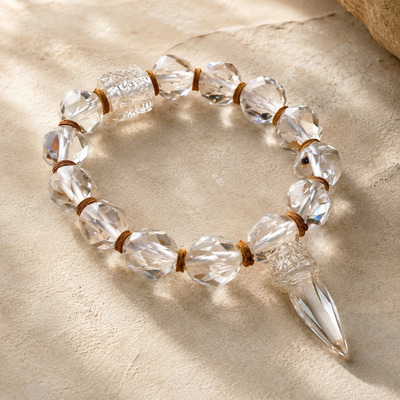
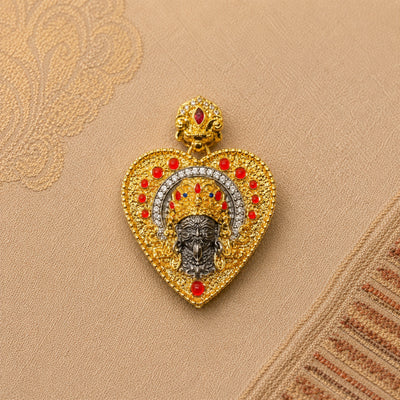
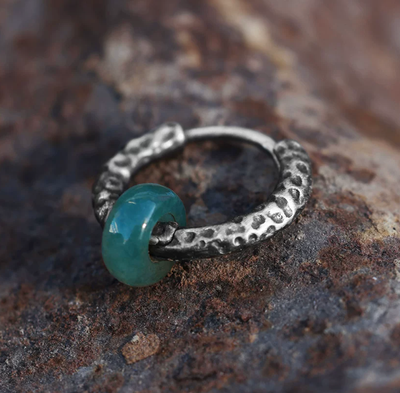
For those seeking a protection piece that also carries a sense of calm companionship across distance, the Turquoise collection is a meaningful place to continue exploring.
Part of: Guardian · Sacred Protection Series ← Click to return to Hub
There are forms of love that feel incomplete because they cannot physically stay beside the person they care for.
A daughter lives in another city while her parents grow older.
A son works abroad and thinks about the road his mother takes home after dark.
A partner boards a plane every other week.
A family member travels alone, studies far away, or lives in a place where you cannot reach them quickly.
In all these situations, love meets its oldest frustration: distance.
You can call. You can text. You can ask them to be careful. And still, when the door closes behind them or the flight takes off or the train pulls away, a part of you remains standing there with one unanswerable wish:
If I cannot go with you, may something of my care go with you.
This is where the logic of amulets begins.
Not in fantasy.
Not in control.
But in the human need to place love somewhere tangible when the body cannot remain present.
Why Protective Gifts Exist in Every Culture
Across civilizations, people have long given small protective objects to those they love.
A charm before a journey.
A blessed thread from a temple.
A token placed in a pocket before a child leaves home.
A pendant pressed into the palm of someone traveling alone.
These gestures do not come from ignorance. They come from tenderness.
They recognize a truth that modern efficiency has not erased: practical care is not the whole of care. We may buy the ticket, book the hotel, share the address, confirm the arrival, and still feel that love has one more thing it wants to do.
It wants to accompany.
An amulet, in its most meaningful sense, is a vessel for that wish. It says: when I cannot watch over you with my eyes, let this stand in the place of my blessing.
In Tibetan traditions, reliance objects and protective forms often carried this emotional logic. They were not merely decorative. They helped hold a relationship between prayer, intention, memory, and embodied reassurance.
The Modern Meaning of an Amulet
Many people feel shy around the word “amulet,” as if it asks them to believe something childish.
But the modern meaning can be understood very simply.
An amulet is an object that carries intentional significance.
Its value lies not only in what it is made of, but in what has been placed into it through attention, blessing, gifting, and repeated remembrance. It becomes a portable threshold between the visible and the invisible dimensions of care.
Psychologically, this matters more than people admit.
When someone far from home touches a gifted object and remembers, “I am being thought of,” their nervous system changes. They feel less alone. They remember caution without panic. They remember belonging even in unfamiliar surroundings. A small object can restore orientation.
That is not a childish idea.
It is a deeply human one.
For Elders, Travelers, and Loved Ones Far Away
Distance creates different kinds of worry depending on who we love.
With elders, the concern is often gentleness. Are they warm enough? Steady enough? Safe enough in the quiet hours when no one is there?
With travelers, the concern is uncertainty. Airports, roads, unfamiliar rooms, interrupted sleep, the vulnerability of moving through places that do not yet know your name.
With children or young adults living away from home, the concern is exposure. The world is large. Not everything in it is kind. You hope they move through it with wisdom, but you also wish they carried one more layer of unseen shelter.
In each case, a protective gift says something words alone cannot quite hold.
Take this, because I would go with you if I could.
Take this, because care should have a body.
Take this, because I want peace to travel with you.
This is why some gifts are remembered for years while others are forgotten within weeks. A true protective object is not only received. It is inhabited. It becomes part of daily crossing—between home and road, night and morning, one city and another, absence and connection.
How Protection Travels
Of course, no object can replace common sense, caution, or real-world care.
But not all forms of protection are logistical.
Some are relational.
Some are symbolic.
Some work by preserving inner coherence in places where fear, loneliness, or disorientation might otherwise take over.
A person traveling with a meaningful object may remember to pause before taking the wrong turn. They may steady themselves before entering an unfamiliar building. They may sleep more peacefully because the mind has been given a form of reassurance. They may touch the object during a difficult moment and feel, with sudden clarity, that they are not emotionally unaccompanied.
This is how protection travels: not as domination over fate, but as continuity of care.
The object becomes a keeper of memory, a compact between giver and receiver, a small portable reminder that someone’s blessing has crossed the distance too.
The Gift as a Quiet Covenant
When you give Guardian to someone you love, you are not just offering an accessory.
You are making a quiet covenant.
Not a superstitious bargain.
A relational promise.
May you be kept.
May the road be gentle with you.
May the night not trouble you.
May your spirit remain intact wherever you go.
This is one of the noblest uses of a sacred object: to make visible the invisible labor of love. All the concern you cannot solve. All the watchfulness you cannot physically enact. All the tenderness that remains awake even when the beloved is far away.
Love has always looked for forms.
A letter.
A photograph.
A ring.
A strand of prayer beads.
A small weight in the hand that says, across continents if necessary: You are not traveling alone.
For Those Who Keep Worrying From Afar
If someone you love is often on the road, living away from home, aging at a distance, or carrying more of life alone than you wish they had to, then perhaps what you want is not a grand gesture.
Perhaps you want a faithful one.
Something they can wear or carry.
Something that does not speak loudly but stays near.
Something that holds your blessing in material form.
That is the enduring dignity of the amulet tradition.
It lets love remain present even when the body cannot.
🛡️ Guardian Series · For You
If you are looking for a meaningful protective gift for an elder, a traveler, a partner, or a loved one living far away, we invite you to explore the TibetanSerenity Guardian Collection.
These pieces are meant to carry blessing, reinforce reassurance, and offer a quiet sense of accompaniment across distance.
👉 Explore TibetanSerenity Guardian Collection
You Might Also Like
- Peace Is Not a Given: How to Build an Invisible Shield Around Your Happiness
- Refusing Negative Energy Allergy: How to Build Boundaries in the Social Jungle
Return to Guardian Hub · Read Pillar: The Silent Power of the Himalayas: A Philosophy of Sacred Protection