Giving someone a mala is different from giving them a piece of jewelry. A mala has a function — it is made to be used — and that function carries its own meaning. You are not giving an object to be displayed. You are giving something to be held, counted, worn through the day.
That specificity is what makes it a good gift for the right person. And it is what makes it a confusing gift if you choose the wrong one.
This guide covers who a mala is actually right for, what to consider when choosing one, and which materials and forms make the most sense in different gifting situations.
→ Part of How to Choose Mala Beads by Intention →
Who a Mala Is Actually Right For
The obvious answer is someone who meditates. That is true, but it is too narrow. A mala is also right for:
- Someone who does not meditate yet but has been thinking about starting — the gift creates a low-pressure entry point
- Someone going through a significant transition (a new job, a move, a loss, a recovery) who would benefit from a daily tactile anchor
- Someone who already wears meaningful jewelry and would understand the difference between a mala and a regular beaded bracelet
- Someone with a connection to Buddhist, Hindu, or Tibetan culture, or a general interest in contemplative practice
It is probably not right for someone who has no interest in spiritual practice and treats jewelry purely as fashion. The object will not resonate, and the meaning you attached to it will not land.
Bracelet or Full Mala?
For gifting, the bracelet form is almost always the better choice. A full 108-bead mala necklace is a significant object — heavier, more conspicuous, more clearly associated with formal practice. Someone who is not already a practitioner may not know what to do with it.
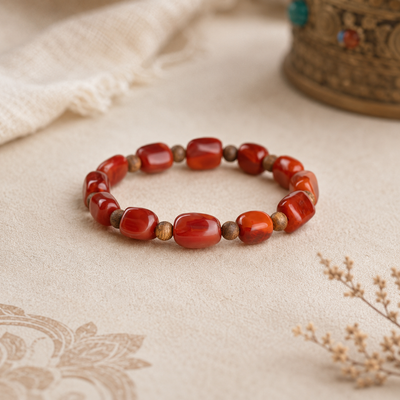
A mala bracelet is easier to receive. It can be worn without explanation. The bead count is still present — most wrap multiple times around the wrist — and the tactile quality of counting is still available. But it does not ask the recipient to immediately situate themselves in a practice context they may not have yet.
If you know for certain that the person has an established sitting practice and uses or would use a full mala, give the full mala. Otherwise, a bracelet is the safer and more versatile choice.
Choosing the Material
For someone with an existing practice: bodhi seed. The traditional material, the one that develops character with handling, the one that most practitioners who take mala beads seriously would choose for themselves. It signals that you understand what the object is for.
For someone just starting out: sandalwood. Lighter, approachable, mild natural scent. It does not feel as weighted with expectation as bodhi seed, which makes it easier to start using without feeling like you need to earn it first.
For someone drawn to crystals or intention-setting: amethyst or citrine. Amethyst for someone in a period of wanting more calm or mental clarity. Citrine for someone working toward something — a new project, a change they want to make, a period of growth. The color choice matters here more than the practice context.
For someone where you are unsure: sandalwood or a simple mixed-bead bracelet. Both read as thoughtful without requiring the recipient to know what to do with them immediately.
What to Say When You Give It
A mala given without explanation is just a bracelet. A brief note — even two or three sentences — changes what the person receives.
You do not need to explain the full history of mala practice or the meaning of 108 beads. Something like: "This is a mala bracelet — it's used for counting breaths or intentions in meditation, but I chose it because [the material / the color / the meaning] felt right for where you are right now" is enough. It tells the person what the object is, that you chose it deliberately, and what you were thinking of when you did.
That is the difference between a gift that gets worn and a gift that gets put in a drawer.
Also worth reading: The Best Tibetan Silver Gifts for Someone Who Meditates →