Most people choose a mala based on what they are looking for — not a material category, but a quality. Something that helps with focus. Something that carries a protective feeling. Something for a period of growth or transition. Something to give someone who is going through a hard stretch.
This section organizes mala choices by that kind of intention rather than by material or form. The three guides below cover the most common purposes: protection, clarity and focus, and gifting.
→ Part of Mala Beads: Types, Meaning, and How to Use Them →
Mala for Protection
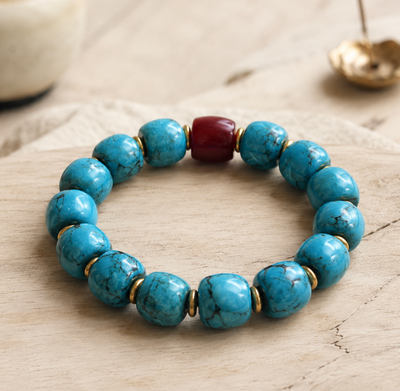
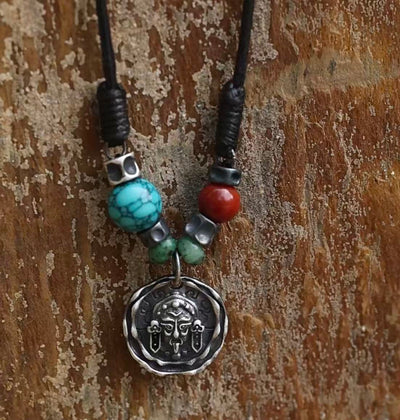
Protection is one of the oldest functions of worn objects. In Tibetan tradition, certain materials and symbols are specifically associated with deflecting harm, stabilizing uncertain situations, and providing a sense of grounded safety during difficult periods. Turquoise appears frequently in this context, as do darker-toned stones and specific symbols like the Dorje.
A mala chosen for protection works partly through the practice it supports — regular contact, regular counting, regular attention — and partly through the associations the material carries. Both matter.
→ Mala Beads for Protection: Which Materials and Symbols to Look For →
Mala for Clarity and Focus
The counting structure of mala practice is itself a tool for focus — it gives the wandering mind something specific to return to. But some materials and intentions amplify this. Amethyst is the most common crystal associated with mental clarity and calm attention. Bodhi seed, for practitioners who use it seriously, develops an association with the practice over years that reinforces the focus simply by being present.
A mala chosen for clarity works best when used consistently in the same context — same time of day, same location, same practice. The repetition builds the association between the object and the state it supports.
→ Mala Beads for Clarity and Focus →
Mala as a Gift
A mala makes a specific kind of gift — one with function as well as meaning. For the right recipient, it is more useful than decorative jewelry and more personal than a generic wellness gift. The key is choosing the right material for where the person is and explaining what you chose and why when you give it.
Bracelet form for most recipients. Sandalwood for someone new to practice. Bodhi seed for an experienced practitioner. Crystal for someone whose interest is more intention-based than practice-based.
→ Giving a Mala as a Gift: What It Means and How to Choose →