If you are looking at mala beads for the first time, the most common questions are practical ones: what exactly is it, what is the 108-bead count about, and how is it different from a regular beaded bracelet or necklace. This guide answers those questions, covers the main materials, and explains how people actually use them — both in meditation and as everyday jewelry.
What a Mala Is
A mala is a string of beads used for counting repetitions of a mantra, breath, or intention during meditation. The full form has 108 beads plus one larger bead, called the guru bead, which marks the start and end of a complete round. Many mala bracelets use a fraction of that count — 27 beads is common — and loop around the wrist multiple times.
The 108-bead count appears across Hindu, Buddhist, and Jain traditions, each with its own explanation for the number. In Tibetan Buddhist practice, 108 is connected to the number of worldly passions a practitioner works to understand and release. In other contexts, the number is linked to astronomical calculations or to the names of deities. The specific reasoning varies by tradition; what is consistent is that the count creates a defined, finite container for practice.
The guru bead functions as a marker and a stopping point. When a practitioner reaches it during counting, they do not cross over it — they reverse direction and start again. It is also, in many traditions, associated with the teacher-student relationship, which is why it keeps its name even when the bead is used outside of any formal practice.
Mala as Jewelry
A lot of people who wear mala beads are not using them for formal meditation. They wear them because the bead count gives the piece a particular texture and rhythm, because the material matters to them, or because the act of touching the beads throughout the day functions as a low-key reminder of something they are trying to keep in mind.
This is not a misuse of the object. Malas in Tibetan contexts have always been worn, carried, and used in ways that blend the devotional and the everyday. A mala hung from the wrist or draped around the neck is doing something a regular bracelet is not — even when no counting is happening.
For buyers who are not practitioners, the piece still functions as a daily object with more visual and tactile presence than most jewelry. The weight of 108 beads, the texture of the knots between them, the feel of the guru bead at the end — these are part of why people reach for a mala over other forms.
Materials
The material affects how a mala feels, how it ages, and what associations it carries. The four most common in the TibetanSerenity line:
Bodhi seed — The most traditional choice. Bodhi seeds come from the sacred fig tree associated with the Buddha's enlightenment. They start light and warm in color, and darken and smooth with handling over time. A bodhi mala that has been used for years develops a surface finish that cannot be replicated by any manufacturing process. For people who want a mala that visibly changes with use, bodhi is the obvious choice.
Sandalwood — Lighter in weight than bodhi, with a mild natural scent that fades slowly over time. Sandalwood malas are particularly common in East Asian Buddhist traditions. The wood is softer than bodhi seed, so surface marks develop more easily, but many people consider this part of the piece rather than damage to it. Better for people who prefer something lighter to wear all day.
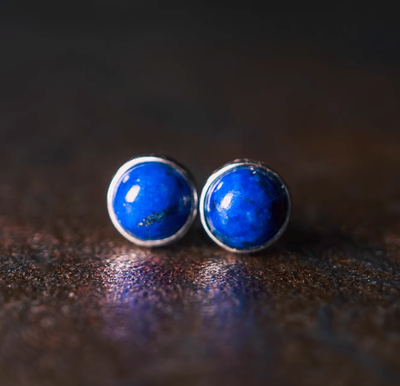
Crystal — Amethyst, citrine, and similar stones cut into beads and strung as a mala. The intention here is different from the wood options: crystal malas prioritize the associations of the stone itself. An amethyst mala is often chosen for calm or clarity. A citrine mala for brightness and abundance. The stones do not age visibly the way wood does, so the piece stays consistent in appearance.
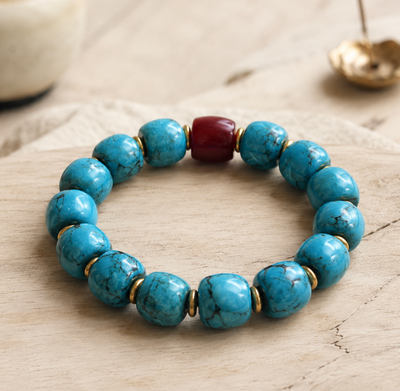
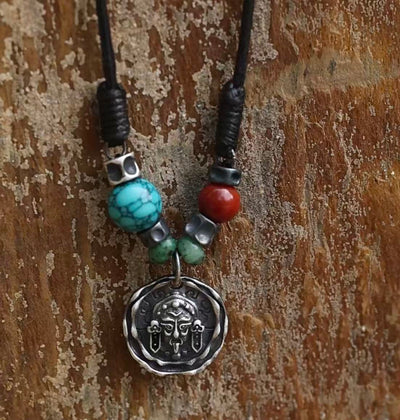
Stone and mixed — Turquoise, agate, and nanhong appear in mala-style strands as well, often mixed with silver spacer beads or combined with other materials. These tend to be more jewelry-oriented than practice-oriented, though the two are not mutually exclusive.
→ Mala Bead Materials: Bodhi, Sandalwood, Crystal, and How Each One Feels to Wear →
How to Use a Mala for Counting
Hold the mala in your right hand, draped over the middle finger. Use the thumb to move from bead to bead, one bead per repetition of the mantra or breath count. The index finger is traditionally left out of contact with the beads in some Tibetan practices — it is associated with ego. When you reach the guru bead, reverse direction rather than crossing over it.
That is the basic mechanics. What you count — a mantra, a breath, a phrase, a prayer — is your own choice, and differs significantly across lineages and individual practitioners. If you are working with a teacher or following a specific tradition, they will have guidance on this. If you are using the mala independently, any repetition that requires focused attention works.
Mala bracelets with 27 beads require four full passes to complete 108 repetitions. Many people use this as a way to practice with something they are already wearing, rather than needing to take out a full necklace mala.
→ How to Use Mala Beads for Meditation: A Step-by-Step Beginner's Guide →
Mala Bracelet vs Full Mala — Which One to Get
The practical difference is portability and use context. A full 108-bead mala is a more complete practice tool and is typically worn as a necklace or kept in a bag. A mala bracelet sits on the wrist throughout the day and is more convenient for informal use — touching the beads during a pause in work, doing a quick round of counting on a commute.
For most people buying their first mala: start with a bracelet. It integrates into daily wear without any adjustment and does not require a specific practice context to be useful. If you develop a more formal counting practice and want something designed for longer sessions, a full mala makes more sense at that point.
→ Mala Bracelet vs Full Mala: Which One Is Right for You? →
Choosing by Intention
If material and format feel similar between two options, the deciding factor is usually what the piece is for. A mala chosen during a difficult period, as a gift for someone going through a transition, or for a specific practice tends to hold more meaning over time than one chosen purely on aesthetics.
Some rough guidance:
- For a grounding daily practice: bodhi seed or sandalwood — materials that age with use
- For calm and clarity: amethyst crystal mala
- For abundance and energy: citrine
- As a gift for a meditator: a full mala in sandalwood or bodhi; if they already have one, a bracelet in a material they do not have
- For someone without a meditation practice: a bracelet in a stone or material they are visually drawn to
→ How to Choose Mala Beads by Intention: Protection, Clarity, Calm, and Gifting →
In this series: Mala Materials · How to Use · Bracelet vs Full Mala · Giving as a Gift
Related: Tibetan Craft: The Complete Guide · Stones & Crystals Guide