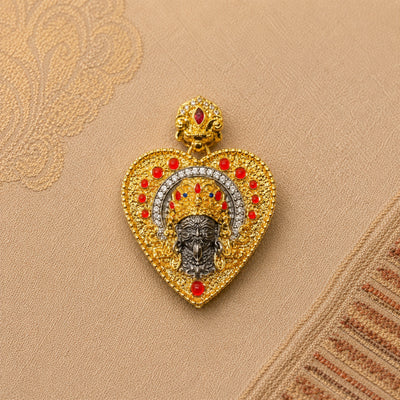
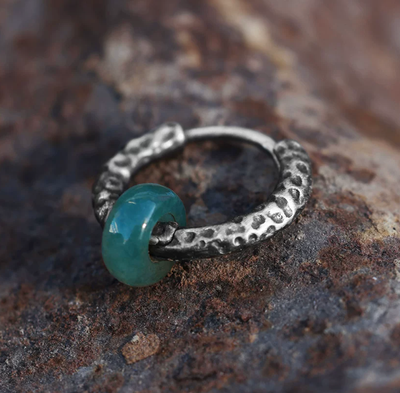
For those drawn to more explicit symbols of luck-clearing and auspicious momentum, the Charms & Amulets collection offers focused forms that naturally align with this prosperity theme.
Part of: Prosperity · Career Success Series ← Click to return to Hub
I have a friend who started a business three years ago. He just closed his Series A funding round.
Everyone congratulated him, but he said: "The hardest part wasn't when we had no money. It was that feeling of ‘nothing goes right’—a key client canceling at the last minute, a core employee suddenly quitting, a partnership that was practically signed falling apart overnight. Any one of these things you could write off as coincidence. But when they happen together, it feels like someone's tripping you in the dark."
That feeling—many of us know it.
A project stalls halfway through.
Something goes wrong the night before a big presentation.
A payment that should have arrived keeps delaying.
A client you've been chasing for months suddenly signs with someone else.
You ask yourself: Is it me? Is my ability not good enough? Is my luck just bad? Did I do something wrong?
Probably none of these. In Tibetan Buddhism, there's a specific concept for this state: obstacles (Tib. barche).
What Are “Obstacles”?
Obstacles don't just mean “bad luck.” They're not punishment. They're invisible resistance—like an undertow when you're swimming, a headwind when you're driving, a rock that falls just as you're climbing.
Tibetans believe that when you're moving upward, you will encounter obstacles.
Why?
Because energy is conserved. If you want to go up, something will try to pull you down. If you want to break through a bottleneck, something will try to keep you stuck. If you want to earn that money, reach that position, seize that opportunity—then the same invisible forces that were clearing your path will also be clearing the path for others who want what you want.
This isn't superstition. It's an ancient observation about how the world works: The closer you get to a breakthrough, the greater the resistance.
So when “bad luck” keeps showing up, it might not mean you're doing something wrong. It might mean exactly the opposite—you're on your way up.
How “Bad Luck” Kills Wealth
The most dangerous thing about obstacles isn't that they make you fail. It's that they drain your energy.
One canceled meeting—you're upset for three days.
One unexpected setback—you're scattered for a week.
One betrayal—you doubt humanity for three months.
Every “bad luck” event quietly steals your attention, your confidence, your judgment. You start playing it safe. You start doubting every decision. You start hesitating when opportunities come—“Last time I trusted my gut, things fell apart. Maybe I should pass this time.”
The real wealth killer isn't competitors. It isn't market fluctuations. It's this slow erosion of your drive.
When your energy gets consumed by small, spirit-grinding resistance, you have nothing left to seize the real opportunities when they come.
At TibetanSerenity, we understand this as “obstacles eating wealth”—not that the money disappears, but that you no longer have the capacity to receive it.
How to “Remove Obstacles”
Tibetan Buddhism has a complete approach to dealing with obstacles. It's not about burning incense and praying for protection. It's three things:
First, recognize them.
You need to see what is actually an obstacle. Not every difficulty is one—some difficulties make you stronger. Those are called “adverse conditions as path.” Real obstacles are the ones that purely drain you, that give nothing back: the repetitive, meaningless, spirit-grinding kind.
Second, cut the connection.
Stop feeding them energy. Don't complain. Don't fight. Don't endlessly chew on “why me?” Every complaint charges the obstacle. Real cutting is saying lightly: “Oh, here it is again.” Then going about your business.
Third, transform them.
This is the advanced step—turning obstacles into fuel. In Tibetan practice, there are specific methods for “taking obstacles as the path.” In business terms, it means asking: What is this “bad luck” trying to tell me? Was I getting too comfortable? Is there something I've been neglecting? Is it time to change direction?
Recognize so you see it clearly. Cut so you don't feed it. Transform so you actually use it.
Something That Helps You “Hold Steady”
When Tibetans travel far, start a business, or undertake something important, they often carry a small object with them.
Not because it can “eliminate” obstacles—obstacles can never be eliminated. But because when obstacles come, it helps you hold steady for just a moment.
That moment matters.
When a client cancels, you touch it and think: Oh, this is an obstacle, not the end of the world.
When your team falls apart, you touch it and think: Oh, here it is again. Handle what needs handling, then keep moving.
When three things go wrong in a row, you touch it and think: Oh, maybe I'm heading up. Push through this, and there's a new level waiting.
It doesn't do anything for you. It just helps you return to yourself in those moments when you'd otherwise be swept away.
In Tibet, people call this “an object that clears obstacles”—not a weapon, but an anchor.
For Those in a “Bad Luck” Phase
If you've been experiencing:
- Projects that keep running into strange problems
- Deals that fall apart at the last minute
- Everyone around you moving forward while you're stuck in small setbacks
- That vague feeling that nothing's quite right, nothing's quite smooth
I want to tell you:
This might not be your fault. This might just be the natural resistance that comes when you're moving upward.
No need to complain. No need to doubt yourself. No need to ask “why me?”
You just need to: Recognize it. Don't feed it. Use it.
And maybe give yourself something that helps you hold steady—a bead, a pendant, a small object you can hold. Next time “bad luck” shows up, touch it, take one breath, then get back to work.
Those obstacles will eventually become footnotes in your story.
And you'll still be moving forward.
🌿 Prosperity Series · For You
If you're looking for something to help you hold steady during a “bad luck” phase, take a look at the TibetanSerenity Prosperity Collection.
Each piece has been through a traditional blessing ceremony—not to “eliminate” difficulties, but to help you remember, when difficulties come: you're still here, you can still hold steady, you can still move forward.
👉 Explore TibetanSerenity Prosperity Collection
You Might Also Like
- Two Entrepreneurs and the People Who Helped Them ← Prosperity Sub-article B
- The Ballast Stone of Great Decision-Makers: Hearing Intuition in a Noisy World ← Prosperity Sub-article C
Return to Prosperity Hub · Read Pillar: The Sacred Protection of Tibetan Jewelry