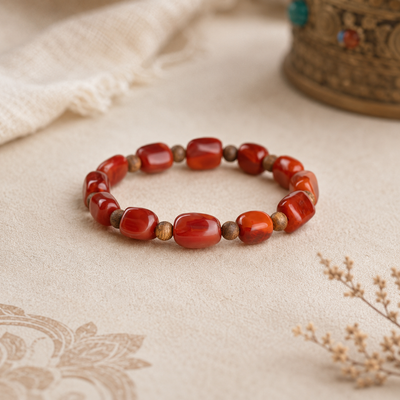
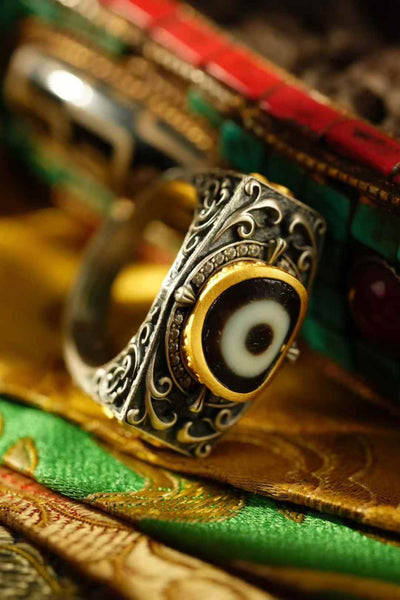
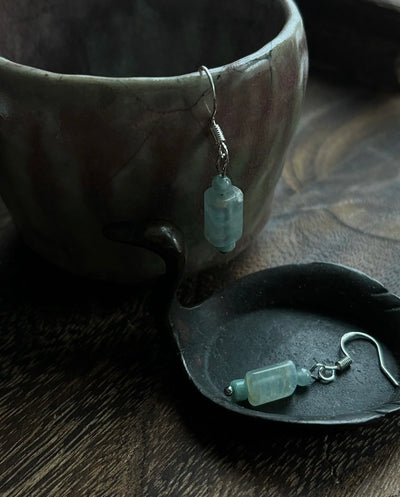
Hand-woven Tibetan bracelets have a real advantage as gifts: they fit almost any wrist without measuring, they're light enough to forget about during a full day of wear, and the handwork is visible even to someone with no background in Tibetan craft. You don't need to explain them for them to land.
This guide is for anyone putting together a gift with intention. We've organized recommendations by the person you're giving to, and noted the specific qualities that make each piece well-suited for that context.
Why Woven Tibetan Jewelry Works as a Gift
Three qualities make hand-woven pieces reliably good gifts. The sliding-knot closure fits almost any adult wrist — no measurements needed, no awkward returns. Unlike a statement necklace or bold ring, a woven bracelet doesn't dictate an outfit; it works with jeans, office wear, travel clothes, weekend casual. And the hand-knotted work is legible even to someone with no background in Tibetan craft — you can see that a person made it, knot by knot. That combination of practical fit and visible making is what gives it weight as a gift.
For the Person Who Meditates or Practices Mindfulness
Someone with an established practice will immediately understand what a hand-woven Tibetan bracelet is — a wearable anchor, a tactile reminder, an object made with intention. The gift lands differently when the receiver already has a relationship with this kind of object.
For this person, look for pieces with clear symbolic content — a knot pattern with a specific meaning, a color combination tied to a particular quality they are working with, or a piece that incorporates sacred elements like turquoise or a totem symbol. Meaning matters more than novelty here.
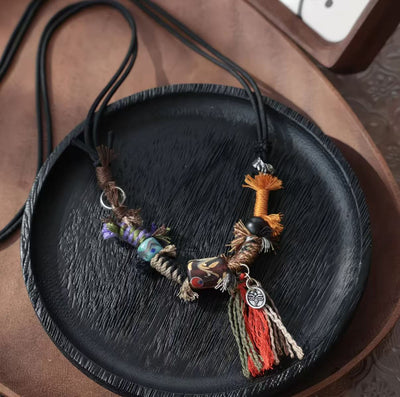
The Tibetan Sacred Totem Necklace — hand-knotted cord with a Tibetan totem pendant — works well for this recipient. The cord is woven, the pendant shows a carved Tibetan totem symbol, and the overall piece has the feel of something made for regular wear rather than occasional display.

For the Traveler or the Person Always in Motion
Hand-woven bracelets are among the best jewelry for people who travel frequently. They do not set off metal detectors. They take up no space and weigh nothing in a bag. They survive the accumulated friction of constant movement better than delicate metal pieces. And because they are adjustable, they work through the inevitable variation of wrist size that comes with changes in temperature and activity.
For a traveler, look for pieces in earthy or neutral tones that layer easily with whatever they happen to be wearing. Avoid overly bold color combinations that might feel out of place across different cultural contexts. A bracelet made as a protection piece is particularly appropriate here.

For Someone Who Prefers Natural Materials and Quiet Aesthetics
Some people are drawn to objects that feel close to their source — linen clothing, wooden objects, unglazed ceramics, handmade paper. For this person, a hand-woven Tibetan bracelet resonates on a material level before it registers as jewelry. The cord has texture. The knots are visible. The overall piece has a matte, organic quality that reads as honest rather than decorative.
For this recipient, pieces that incorporate natural materials alongside the woven cord — a wooden bead, a turquoise accent, a hand-carved pendant — will resonate most. The Zhalilhamu Fortune Charm fits this kind of taste. Natural materials throughout, clear handcraft, and a pendant that has visual weight without being ostentatious.

On Presenting the Gift
A hand-woven Tibetan bracelet benefits from a brief word of context when it is given — not a lecture, but a sentence. "This is handmade in the Tibetan tradition, the knot pattern is for protection" gives the receiver something to hold alongside the object.
If you are giving the piece without being present — by post, as part of a care package, or inside another gift — a small handwritten note with the basic intention of the piece serves the same purpose. The bracelet will communicate its craft without explanation; the note gives the receiver a way to complete what the object has started.
Want to understand the symbolism of what you're giving? Knot, Color, and Pattern: What the Details on Hand-Woven Jewelry Mean →
The bracelets themselves are not engraved or embroidered with personalization, but the intention behind them is inherently personal. You can personalize through the choice of color (red for energy, white for clarity, green for healing), the choice of symbol on any pendant element, and the note that accompanies the piece. These forms of personalization require you to know something true about the person you are giving to.
Most hand-woven Tibetan bracelets use an adjustable sliding knot that accommodates wrists from approximately 14cm to 21cm. You do not need to measure anything. If you are giving to someone with noticeably small or large wrists, check the product's size range in the description. But for most adults, adjustable fit means size is simply not a factor.
Tell them briefly. Tibetan woven jewelry carries meaning that is not always immediately legible to someone outside the tradition, and knowing the intention behind a piece changes how the receiver relates to it. A single sentence gives the receiver something to return to every time they look at their wrist.