Agate is the stone most people own before they know they own it. It shows up in bracelets, pendants, and carvings across multiple traditions — Tibetan, Chinese, South American, African — because it is widely available, durable, visually diverse, and works well in a range of jewelry applications. Most people who wear it like it without knowing much about it.
That accessibility is agate's actual strength. It is the easiest entry point into Tibetan stone jewelry, and in many cases, it turns out to be exactly what you need and nothing more complicated than that.
What Agate Is
Agate is a variety of chalcedony, a microcrystalline form of quartz. It forms in layered bands — the banding is its most recognizable visual characteristic — and occurs in an exceptionally wide range of colors: from nearly black to warm amber, from grey-white to deep brown, from pale cream to vivid orange-red. The color depends on the mineral content of the water that deposited the silica as the stone formed.
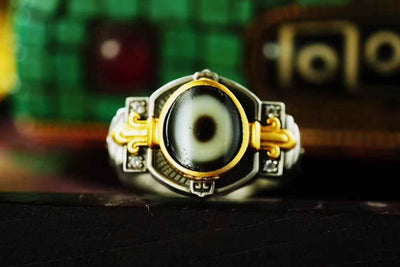
In Tibetan and Himalayan jewelry traditions, agate has been used for centuries alongside turquoise and coral. Certain agate varieties — particularly the banded "dzi beads" — hold significant cultural and spiritual value in Tibetan contexts, where ancient specimens are treated as objects of considerable importance. Contemporary agate jewelry draws on this tradition without necessarily making the same claims about antiquity or sacred status.
The Visual Range
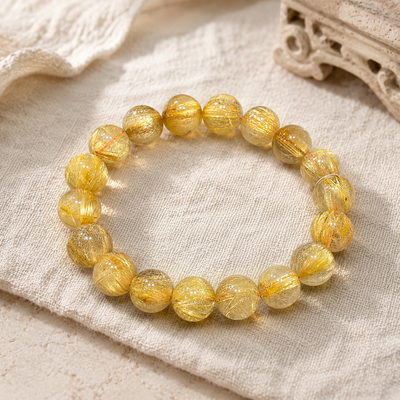
The practical appeal of agate for everyday jewelry is its visual flexibility. A dark banded agate in near-black and brown reads as grounded and quiet — it layers easily with other materials and does not compete for attention. A warm amber agate in honey and caramel tones reads as warmer and more organic. A red agate in brick and vermilion tones sits closer to nanhong in character and suits warmer dressing.
The banding patterns in agate also vary widely. Some pieces show tight, regular bands. Others have looser, more irregular patterns. Some have a translucency that allows light to pass through the thinner sections; others are fully opaque. No two stones are identical, which means even a simple strand of agate beads has visual variety that a single-material synthetic piece cannot replicate.

Agate for Everyday Wear
Compared to turquoise, agate is more resilient. It is harder and less porous, which means it handles moisture, sweat, and daily friction better. You do not need to remove an agate bracelet before washing your hands or during light activity. This makes it a practical choice for someone who wants to wear their jewelry consistently rather than managing it carefully.
Agate also layers well. Its earthy tonal range is compatible with silver, wood, woven cord, and other natural materials. A banded agate bracelet alongside a simple silver piece or a sacred wood bracelet creates a combination that looks considered without requiring deliberate curation.
Agate as a Gift
For gifting, agate is reliable in a specific way: its visual range is wide enough that it is hard to choose wrong. It does not have the strong cultural specificity of turquoise or the collector's market associations of nanhong, which means it lands easily across a wider range of aesthetic preferences.
The best agate gift choices are those where the color clearly suits the recipient. Dark banded agate for someone who dresses in neutrals and dark tones. Warm amber agate for someone who gravitates toward earthy, natural materials. Red agate for someone who wears warm, saturated colors.
Both are varieties of chalcedony, so they are mineralogically related. The distinction is visual: onyx typically refers to black or black-and-white banded chalcedony, while agate covers the full range of banded chalcedony in all colors. In practice, a piece marketed as "black agate" and one marketed as "onyx" are often the same material — the naming depends on the seller's convention rather than a precise mineralogical boundary.