Copper and brass jewelry raises a few practical worries silver does not: whether it will oxidize and go dark, whether it will turn your skin green, and whether "Tibetan silver" is actually silver. Worth answering before you buy, because the answers change what you should pick and how you keep it.
Copper, Brass, and What "Tibetan Silver" Usually Is
Copper is the reddish metal, pure and warm-toned. Brass is copper mixed with zinc, which gives it a yellow, gold-like color. Both have been worked across the Himalayas for ritual fittings, bead caps, and pendants for a long time. One thing to clear up: a lot of jewelry sold as "Tibetan silver" contains little or no actual silver, and is often a white copper or nickel alloy. That is not necessarily a problem, but you should know you are buying it for the look and the craft rather than for silver content.
Oxidation, Patina, and the Green-Skin Question
Copper and brass both darken over time as they react with air and skin oils. Some of that is wanted. Antique-finish brass is deliberately darkened to look aged, and a lot of people like how raw copper deepens with wear. If you prefer bright metal, you will be polishing it now and then.
The green skin is real but harmless. It happens when copper reacts with sweat and the acids on your skin, leaving a temporary green mark that washes off. If that bothers you, look for pieces with a protective lacquer, or wear copper on cooler, drier contact points. How much it shows varies a lot from person to person.
The Craft Is What You Are Paying For
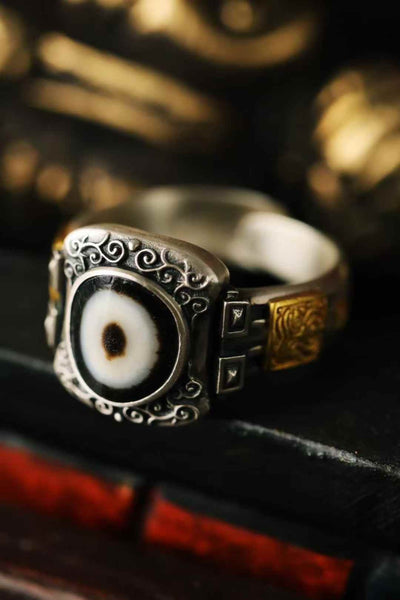
Himalayan copper and brass pieces are often hand-formed and chased, with patterns punched or hammered in by hand rather than cast, which is why the detailing shifts slightly from piece to piece. On many ritual objects the metal is both the structure and the meaning, carrying symbols hammered straight into the surface.
Copper in Tibetan Tradition
Copper has a long place in Himalayan ritual metalwork, used for prayer wheels, vessels, and fittings, and in many traditions it is associated with warmth and conductivity in both a literal and a symbolic sense. As with most of these associations the specifics vary by region and lineage, so take them loosely. As jewelry, copper and brass simply give you a warmer, more antique tone than silver.
Caring for Copper and Brass
If you want it bright, polish occasionally with a proper metal polish, or with a little lemon and salt, then rinse and dry. If you like the darkened patina, leave it alone and wipe with a dry cloth. Keep it dry between wears, since moisture speeds tarnish, and take it off before showering or swimming.
Comparing metals? See what Tibetan silver actually is.


It can, when copper reacts with sweat and the acids on your skin. It is harmless and washes off. A lacquered piece or drier contact points reduce it, and how much it shows varies by person.
Often not. Much of it is a white copper or nickel alloy with little or no silver content. Buy it for the look and the craft, and ask the seller directly if silver content matters to you.
For bright metal, polish with metal polish or with lemon and salt, then rinse and dry. For a patina look, just wipe it dry. Keep it dry between wears to slow tarnish.