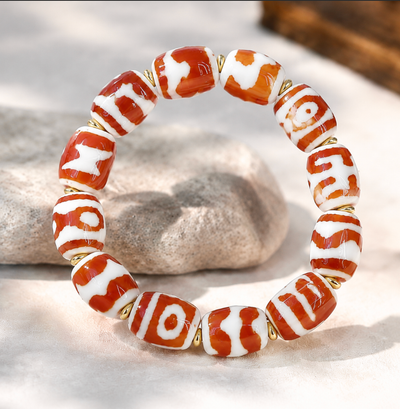
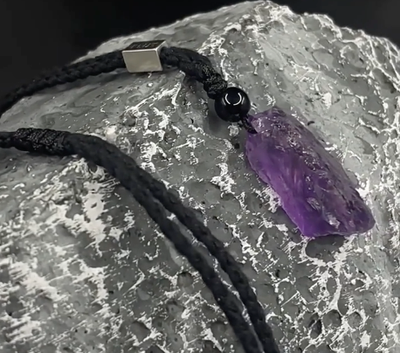
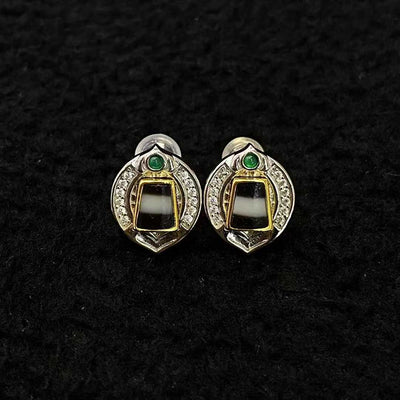
Most jewelry asks to be seen.
Sacred Wood jewelry asks to be held.
This is not a metaphor. The experience of wearing a wooden bead bracelet is fundamentally tactile — it begins the moment you pick it up, before it is even on your wrist. The warmth of the surface. The way the beads move against each other. The subtle give of natural material under the pressure of a thumb. None of this is incidental. It is the point.
This piece is about why Sacred Wood jewelry feels the way it does — and why that feeling matters.
The Texture: What Your Fingers Already Know
Run your thumb across a strand of wooden beads. The surface is not perfectly smooth. There is grain — subtle ridges and variations in the wood's structure that make each bead slightly different from the next. Some beads have a tighter grain that feels almost poreless. Others have a more open surface with visible channels running through them. None of them are uniform.
This variation is not a quality control failure. It is evidence of material. Each bead came from a tree that grew in a specific place, under specific conditions, over years or decades. The grain records that history. No two beads from different trees will ever be identical, which means no two bracelets made from natural wood will ever be exactly alike.
Compare this to the surface of a polished metal bracelet, or a glass bead, or a resin cast piece. These surfaces are consistent — uniform, repeatable, designed to a specification. The consistency is part of the value proposition for those materials. But it is also why they feel cold, why they do not warm under sustained touch the way wood does, and why they do not develop the kind of individual character that makes an object feel like it belongs to one person.
The Weight: Lighter Than It Looks, Heavier Than It Seems
Sacred Wood jewelry is lighter than metal jewelry of equivalent visual size. A wooden bead bracelet that looks substantial on the wrist weighs almost nothing compared to a silver cuff of similar dimensions. This lightness changes how it is worn: it is easy to forget it is there. It does not pull at the wrist or catch on fabric in the way heavier jewelry does.
And yet it does not feel insubstantial. There is a density to wood — a solidity — that distinguishes it from lightweight synthetic materials. The beads have heft relative to their size. They sound different when they move against each other: a soft, dry click rather than the ring of metal or the silence of rubber.
This combination — genuinely lightweight but not flimsy — is what makes Sacred Wood jewelry wearable throughout the day without fatigue. It settles into the background of physical sensation without disappearing from it entirely.
Matte Over Gloss: Why the Absence of Shine Matters
Sacred Wood has no reflective surface. Light does not bounce off it. It absorbs light rather than deflecting it, giving the material a depth that polished surfaces cannot replicate.
This quality has an emotional register. Shiny surfaces create a social signal — they announce themselves, they catch attention from a distance, they perform visibility. Matte surfaces do the opposite. They exist for the person in contact with them, not for the room they are in.
For people who wear jewelry as a form of private intention — a reminder to themselves, a grounding object, a practice tool — the matte, absorptive quality of wood is more appropriate than gloss. It is inward-facing in a way that reflective surfaces are not.
This is why Sacred Wood jewelry pairs so naturally with meditation and contemplative practice. The material does not ask to perform. It simply exists, warm and present, in the hand or on the wrist.
The Grounding Effect: What "Grounding" Actually Means
The word "grounding" is used so often in wellness contexts that it has started to lose its edge. So it is worth being specific about what it means in the context of Sacred Wood jewelry.
Grounding, in a practical sense, refers to the return of attention to the body and to the present moment. When the mind is scattered — running through future concerns, reviewing past events, spinning in abstraction — grounding is the act of locating yourself back in physical experience: what you can feel, what you can sense, where you actually are.
Natural materials support this return in a way that synthetic ones typically do not. The variation of grain under the fingers. The warmth that develops with sustained contact. The dry, organic smell of the wood. These sensory inputs are immediate, specific, and grounded in the physical world in a way that a smooth, uniform surface is not.
This is not magic. It is the ordinary psychology of sensory anchoring — the same reason people reach for worry stones, fidget with textured objects, or find calm in handling natural materials. Sacred Wood jewelry simply puts that sensory anchor on the wrist, where it is accessible throughout the day.
← Back to Sacred Wood Jewelry: The Complete Guide · Tibetan Craft Overview
Frequently Asked Questions
Why does wood feel warmer than metal even at the same room temperature?
Does Sacred Wood jewelry work for people with sensitive skin?
Is the grounding effect of wood jewelry backed by any evidence?
How long does it take for a wooden bracelet to feel like "mine"?
Want to layer sacred wood with silver or woven jewelry? Silver, Wood, and Weaving: How to Layer Tibetan Craft for Everyday Wear →