Protection is one of the clearest use cases for a mala. The practice of carrying or wearing an object associated with protection is older than most organized religion — the idea that certain materials, symbols, and intentions can function as a kind of warding is present across cultures and traditions. In Tibetan practice, this is explicit: specific materials are chosen for their protective associations, specific symbols carry meanings oriented toward deflecting harm, and the regular contact of mala practice reinforces the intention.
This guide covers which materials and symbols are most associated with protection in this tradition, and how to choose between them.
→ Part of How to Choose Mala Beads by Intention →
Materials Associated with Protection
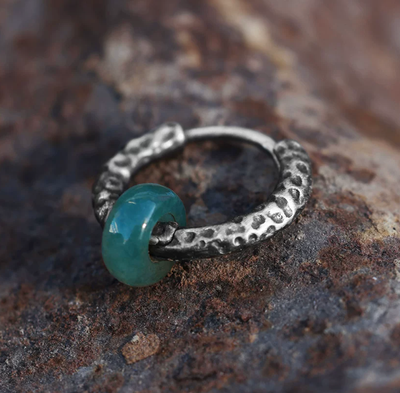
Turquoise is the most consistently protection-associated stone in Tibetan jewelry tradition. In many Tibetan contexts, turquoise is worn as a guardian against misfortune, negative energy, and harm during travel. The specific associations vary by region and lineage, but the protective reading of turquoise is widespread enough to be consistent across most sources. A turquoise mala or turquoise-accented bracelet carries this association into daily wear.
Darker stones — black agate, obsidian, darker labradorite — appear frequently in protective jewelry across cultures. The visual quality of the material (dense, opaque, absorbing rather than reflecting) parallels the intended function. These are not specific to Tibetan tradition but are consistent with how protective materials tend to be understood.
Bodhi seed with protective symbols engraved is a traditional Tibetan form. The combination of the traditional mala material with specific protective iconography — the Dorje, protective deity faces — creates a piece oriented explicitly toward this function.
Symbols Associated with Protection
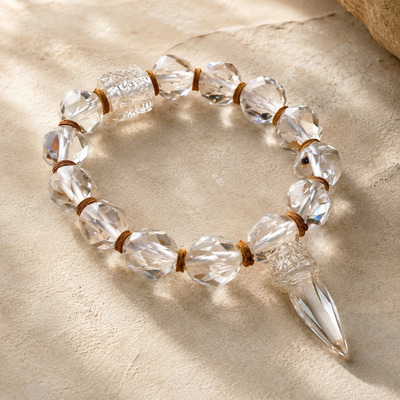
The Dorje (Vajra) — a ritual object representing indestructible clarity and strength. As a pendant or engraved element on a mala, it is one of the most direct symbols of protection in Tibetan practice.
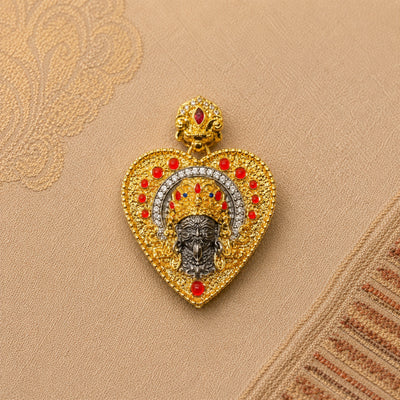
Protective deity faces — carved guardian figures that appear on pendant beads. These are worn with the understanding that the figure functions as a guardian for the wearer.
The knot symbols — the Endless Knot (Shrivatsa) in particular appears frequently in protective contexts, representing the continuity that binds positive outcomes together and keeps negative forces out.
How to Choose
If visual presence matters — if you want something you can see and recognize as protective throughout the day — turquoise is the clearest choice. The blue-green color is distinctive and immediately connected to its traditional associations.
If you prefer something less visually conspicuous but still grounded in the tradition — a bodhi seed mala with a Dorje pendant bead or protective engraving. The mala looks traditional without telegraphing its protective function to anyone who does not already know what they are looking at.
For gifting: turquoise for someone who is traveling, going through a period of instability, or who would appreciate a piece with clear visual presence. Bodhi seed with protective symbols for a practitioner.