Focus is not something you can force. But you can create conditions that support it. A mala practice is one of those conditions — the counting structure gives the scattered mind something precise to return to, and over time, the object itself begins to function as a cue. Picking it up becomes a signal to the nervous system that this is the time for a different kind of attention.
This guide covers which materials work best for clarity-oriented practice and how to build a simple routine around them.
→ Part of How to Choose Mala Beads by Intention →
Why Mala Practice Supports Focus
The mechanics of mala counting require just enough attention to prevent the mind from drifting completely, while leaving enough mental space to stay with the practice rather than managing the counting. This is the same principle behind other repetitive meditative practices — the rhythm holds you without demanding everything.
For people who find open-awareness meditation difficult (sitting with no object of focus, watching thoughts arise), mala counting is often a more accessible entry point. There is always something to return to.
Materials for Clarity Practice
Amethyst is the crystal most consistently associated with mental clarity and calm focus in contemporary spiritual practice. Its purple color has been linked to contemplative states across cultures, and its visual quality — clear, cool, consistent — translates into a practice object that feels oriented toward stillness rather than activation.
An amethyst mala used consistently in the same practice context builds association over time. The cool weight of the beads in the hand, the consistent color in the peripheral vision during a session — these become part of the condition that supports the state.
Bodhi seed for practitioners with an established practice. The aging surface of a well-used bodhi seed mala carries the accumulated record of past sessions. For some practitioners, that history in the object itself becomes a focus aid — the mala has been here before, in this state, many times.
→ Amethyst Meaning: Symbolism, Uses, and Best Jewelry Styles →
Building a Clarity Routine
Consistency matters more than duration. A five-minute session done at the same time every day builds the cue association faster than a forty-minute session done irregularly.
A simple structure: same time, same location, same number of rounds. Morning tends to work better than evening for clarity-oriented practice, because you are building a mental state for the day ahead rather than winding down from one that has already happened.
Start with one round of 108. Expand when that feels established rather than forcing longer sessions before the habit is stable.
Wearing the Mala Outside of Practice
Wearing the mala between sessions extends the cue into daily life. When you touch the beads during the day — adjusting the bracelet, feeling the beads briefly during a pause — you are briefly activating the same association built during the practice session. This is not the same as formal counting, but it is not nothing either.
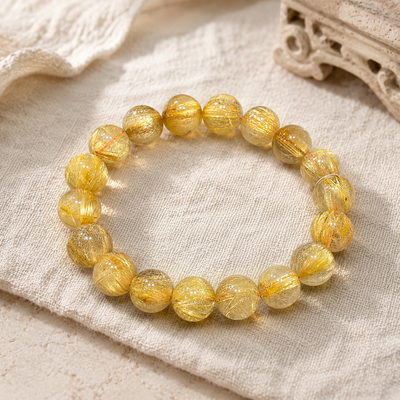
A bracelet works better for this than a full mala, because it is on your wrist throughout the day without requiring any active decision to put it on or take it off.