Mala beads last a long time if you treat them reasonably. The cord can weaken, wooden beads can crack if dried out, and crystal beads can chip if knocked hard against surfaces. None of these are difficult problems to avoid once you know what causes them.
This guide covers care for the three most common mala materials — wood, crystal, and stone — plus cord maintenance and storage.
→ Part of How to Use Mala Beads: Counting, Meditation, and Daily Practice →
Wood Malas (Bodhi Seed, Sandalwood)
Wood is the most maintenance-sensitive of the common mala materials. The main risks are moisture damage and drying out — both cause problems, in opposite directions.
Moisture: Do not wear a wooden mala while swimming, showering, or in heavy rain. Extended contact with water softens and weakens the cord faster, and can cause wooden beads to swell unevenly, which stresses the drilling holes and can lead to cracking as they dry. Sweat from normal daily wear is fine — it is prolonged soaking that causes damage.
Drying out: In very dry climates or if stored for long periods, wooden beads can dry out and develop surface cracks. A light application of natural oil — a small amount of jojoba or almond oil, rubbed in with a cloth — once every few months keeps the surface from drying. Do not saturate the beads; you are conditioning the surface, not soaking the wood.
Aging: Bodhi seed malas will darken and develop a patina with regular handling. This is normal and considered a positive quality — the bead is recording the practice. Sandalwood gradually loses its scent over years of use. Neither of these is damage.
Cleaning: Wipe with a dry or very slightly damp cloth. Avoid soaps, chemical cleaners, or anything abrasive.
→ For wooden prayer beads specifically: How to Care for Sacred Wood and Prayer Beads →
Crystal and Stone Malas (Amethyst, Citrine, Turquoise)
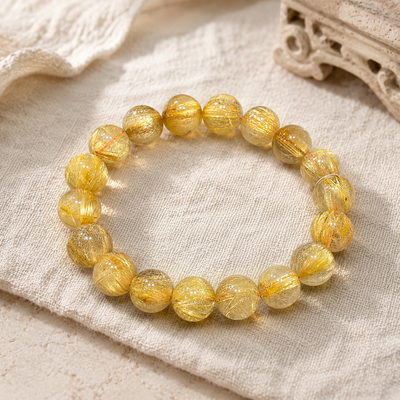
Crystal and stone beads are more durable than wood in most respects — they handle moisture better, do not dry out, and maintain their appearance consistently over years of wear.
Water: Most crystal malas can be worn during light activity without issue. Avoid extended soaking, which can weaken the cord and any metal components over time, but occasional contact with water will not harm the stones.
Sunlight: Some crystals fade with prolonged direct sun exposure. Amethyst is particularly susceptible — extended sunlight can lighten the purple color over months. Store crystal malas away from windowsills or surfaces with prolonged sun exposure. Wearing them during the day is fine; long-term storage in direct light is not.
Chipping: Crystal beads can chip if knocked hard against hard surfaces. They are durable but not indestructible. Take the mala off before activities where impact is likely.
Cleaning: Wipe with a soft cloth. For a deeper clean, briefly rinse under cool water and dry thoroughly before storage. Avoid chemical cleaners or ultrasonic cleaners, which can affect the cord and any metal spacers.
The Cord
The cord is the part of a mala that wears out first. Most malas are strung on silk, nylon, or cotton cord. Signs that a cord needs replacing: visible fraying at the knots between beads, elasticity that has stretched out unevenly, or any bead that has become loose and moves more freely than the others.
A worn cord is worth replacing before it breaks. Restringing a mala is a straightforward repair that any bead jewelry repair shop can do, and many mala makers offer restringing services. The beads themselves will outlast many cords.
To extend cord life: avoid getting the mala wet as much as possible (water weakens natural fiber cords), and do not leave it in a hot car or in direct sunlight for extended periods.
Storage
Store mala beads in a cloth pouch or a small box rather than loose in a bag where they can knock against other objects. Wooden malas benefit from being stored somewhere with moderate humidity — a consistently very dry environment accelerates drying. Crystal malas are less sensitive to storage conditions but still appreciate not being knocked around.
Many practitioners keep their mala on a small altar or designated surface when not in use. This is partly practical (it stays clean and untangled) and partly a way of marking the mala as something distinct from ordinary objects.